Food is one of the largest variable costs on any trip and one of the most straightforward to control. I learned this the hard way on an early trip to London when I looked at my credit card statement afterward and realized I’d spent nearly $60 a day on meals, most of which were forgettable. The memorable ones cost roughly the same as the forgettable ones. The lesson took a while to absorb, but it stuck.
Breakfast Is Where Most Travelers Overpay First
Hotel breakfast is convenient and priced accordingly. A coffee and a croissant at a hotel restaurant in Paris costs 15 euros. The same coffee and croissant at the boulangerie two blocks away costs 3 euros. The croissant is better at the boulangerie. This pattern repeats in virtually every travel destination: the hotel charges a premium for proximity and you pay it if you don’t have a plan.
The plan is simple. Find the nearest supermarket or local bakery on the first day. Stock the basics: bread, cheese, fruit, yogurt, whatever travels in a daypack. Breakfast assembled from a supermarket costs $3 to $5 and takes ten minutes. That decision, made consistently over a week, saves $60 to $100 before you’ve made any other change to your spending.
Lunch Costs Less Than Dinner for the Same Food
Most sit-down restaurants in Europe, and many elsewhere, offer a midday fixed menu: soup or salad, a main course, sometimes dessert and a drink, for a price significantly lower than the dinner equivalent. In France it’s the menu du jour. In Spain the menu del dia. In Portugal the prato do dia. In Italy the pranzo. These lunch menus at restaurants that charge 30 to 40 euros per person at dinner often run 12 to 18 euros at midday, for food of equal quality from the same kitchen.
Shifting the main restaurant meal to lunch rather than dinner saves real money over a week and has a side benefit: you have the afternoon to walk it off rather than going to bed full. Dinner becomes a lighter, cheaper affair — cheese and bread from a market, street food, a bowl of soup somewhere simple.
Eat Where the Locals Eat
The clearest signal that a restaurant is priced for tourists rather than residents is a menu posted in five languages near the entrance. Locals don’t need the translation. A restaurant where the menu is handwritten on a chalkboard, where the staff doesn’t automatically switch to English, where the neighboring tables are eating rather than photographing: that’s where the food is usually better and the prices are reliably lower.
Walking two or three blocks away from any major tourist attraction in any city typically cuts restaurant prices by 30 to 50 percent. The food doesn’t change. The rent is lower, and some of that difference passes to the customer.
Markets and Street Food Are Not a Compromise
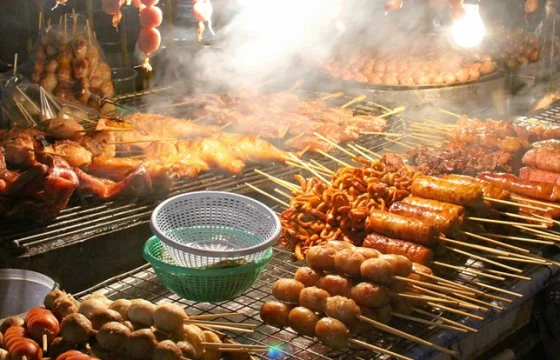
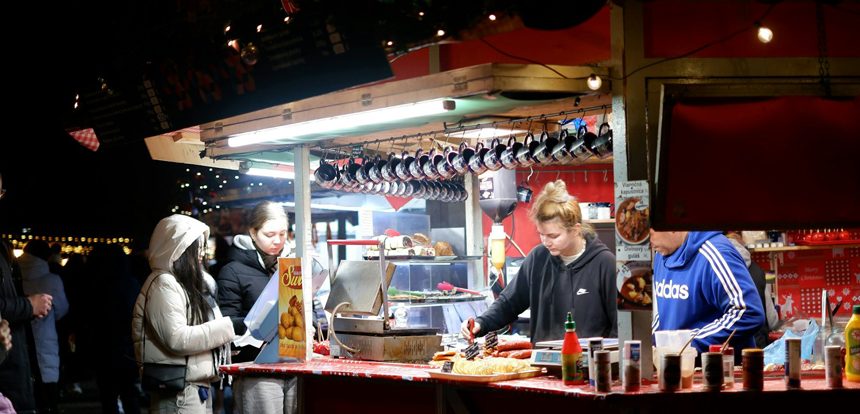
Some of the best eating I’ve done on any trip has been standing at a market stall or sitting on a plastic stool at a street cart. A bowl of pho in Hanoi from a sidewalk cart costs $1.50. Tacos from a taqueria in Oaxaca cost 75 cents each. A slice of pizza from a Roman al taglio shop costs $2. These aren’t consolation meals eaten because the budget ran out. They’re the real food of wherever you are, sold at the prices local people pay.
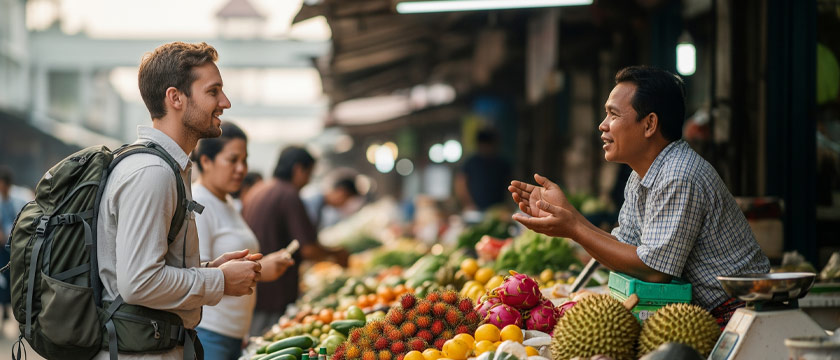
Food markets are worth prioritizing in any city with a good one: Borough Market in London, La Boqueria in Barcelona, the Mercado Central in Valencia, Pike Place in Seattle. Free to walk through, cheap to eat from, and usually a better two hours than most museum visits.
Accommodation With a Kitchen Changes the Math
An Airbnb apartment with a kitchen costs roughly the same per night as a comparable hotel room in many cities, and it eliminates the entire breakfast calculation. A grocery run on the first day covers breakfast for the week. Dinner becomes optional restaurant spending rather than a necessity. For trips of five nights or more, the food savings from a kitchen frequently cover any difference in accommodation cost.
The One Meal Worth Spending On
Every destination has one meal that’s worth the full price: the tasting menu at the restaurant that earned its reputation, the seafood at the waterfront spot that’s been there for 40 years, the specific regional dish that can’t be properly replicated anywhere else. Budget carefully enough everywhere else that this meal doesn’t feel like a decision. It’s the one you’ll actually remember. The hotel breakfasts are not.
Eating well on a budget isn’t about sacrifice. It’s about noticing that the expensive option is often not the better option, and that the best food on most trips is found in places that couldn’t survive on tourist traffic alone. The full approach to eating like a local and spending half the price is worth reading before your next trip.
For safe food handling while cooking on the road, see the USDA's food safety resources.