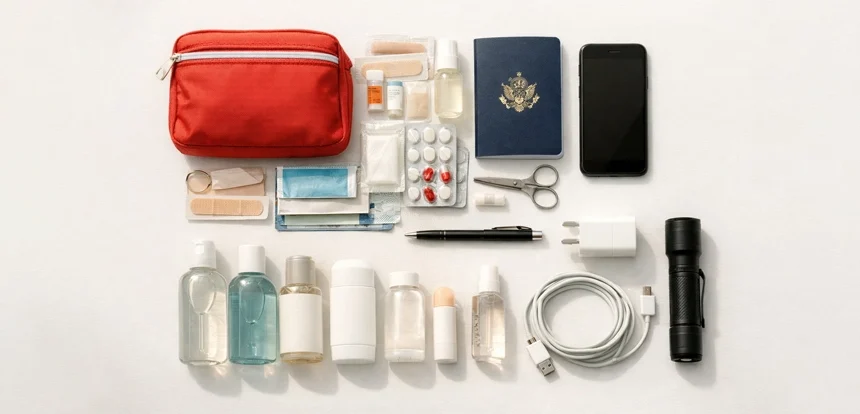
There’s a specific kind of travel misery that comes from needing something you didn’t pack. Not the things you forgot at home — the things you’d have brought if you’d thought about it. The emergency travel kit is the answer to that problem. It’s not a full bag. It’s a small, consistent collection of things that cover the scenarios most likely to go sideways on a trip.
Build it once, keep it ready, and the moments when everything goes wrong become manageable.
Documents and Copies
Everything important goes in the carry-on, never in checked luggage. Passport, driver’s license, travel insurance information, and any visas or entry documents relevant to the trip. If you’re traveling with children who aren’t your own, bring a signed permission letter from their parents.
Keep digital copies of all documents in your email or cloud storage so they’re accessible even if the physical copies are lost. A photo of your passport saved to your phone has gotten more than a few travelers through border situations faster than expected. Write down your credit card company’s international collect call number and your travel insurance emergency line — phone batteries die, and a written number is more reliable than a contact that lives only in your phone.
Medications and Health Basics
Prescription medications belong in your carry-on in original labeled containers. Pack enough for several extra days beyond your trip as a buffer against delays or lost luggage. If you take daily medication, this is non-negotiable.
A small first aid kit earns its space on any trip longer than a few days. Adhesive bandages in a few sizes, pain reliever, antihistamine, antidiarrheal medication, and any prescription items you might need. Add a thermometer if you’re traveling with kids. None of this is heavy and all of it has a moment on most trips when it becomes genuinely useful.
Electronics and Power
A portable power bank is the modern travel emergency item that didn’t exist a decade ago and is now indispensable. When your flight is delayed four hours and your phone is at 12 percent, a charged power bank is worth more than almost anything else in your bag. Keep it charged before you travel.
A multi-port USB charging cable that works with your devices saves the inevitable scramble for the right cable at the wrong moment. An international adapter if you’re going abroad. Download offline maps for your destinations before you leave — Google Maps and Apple Maps both support offline downloads, and having maps that work without cell service has saved many a trip from a wrong turn with no data.
Consider an eSIM for international travel. Activating a local data plan digitally as soon as you land, without needing a physical SIM swap, keeps you connected at local rates instead of roaming charges.
Toiletry Basics
A small toiletry kit that stays stocked and ready to grab is more useful than repacking from scratch before every trip. TSA requires liquids in containers of 3.4 ounces or less, all fitting in a single clear quart-size zip bag. Keep that bag in your emergency kit permanently with travel-size versions of whatever you use daily.
A few additions worth including: dry shampoo for long travel days when a shower isn’t happening, a travel-size stain remover pen for the inevitable spill on the only clean shirt you have left, and lip balm for dry airplane cabin air. These are small things that make a long travel day noticeably better.
Snacks
Carry food. Not because airport food is bad (it is) but because hunger makes everything harder. A delayed flight, a long connection, an unexpected wait — all of these are more manageable with something to eat. Trail mix, nuts, dried fruit, or any high-protein snack that travels well and doesn’t require refrigeration. This is not glamorous advice, but it works consistently.
The Small Things That Come Up More Than Expected
A compact sewing kit handles the button that comes off a shirt on the second day of a business trip. A few safety pins solve the same category of problem faster. A pen — an actual pen — for the customs and immigration forms that still exist on most international arrivals and can’t be filled in on a phone.
Duct tape sounds excessive until the zipper on your suitcase breaks 400 miles from home. A small roll of it has a way of earning its place in a bag that anything important is traveling in.
The emergency travel kit isn’t about being prepared for everything. It’s about being prepared for the things that actually happen — the delayed flights, the lost bags, the dead phones, and the shirt that needed a button on the one day you actually needed to look presentable. Most of these situations are recoverable with the right items already in your carry-on.
For the full checklist on preparing for travel emergencies, see Ready.gov's travel preparation guide.