There’s a geography to tourist restaurant pricing that’s almost mathematical. Within two blocks of any major attraction, any famous square, any scenic waterfront, the prices are aimed at people who are there once, won’t be back, and are making decisions based on convenience and proximity rather than value. The food is usually worse. The margins are usually higher. The menus often have photos.
Walk four blocks in any direction and the economics change entirely. The restaurants there serve people who live nearby, who will come back next week, who know what things should cost. These are the places worth finding.
The Two-Block Rule
When you’re hungry near a tourist site, don’t eat within two blocks of it. Just walk. Pick a direction that takes you away from the main flow of people. When you start seeing restaurants without English menus in the window, without hostesses beckoning from the doorway, without photos on the menu board – that’s the neighborhood. A pasta dish that costs 22 euros on the Piazza Navona costs 9 euros three blocks east. The pasta is the same. The rent is different.
This is not a particularly sophisticated insight. It’s just one most people don’t act on because they’re tired and hungry and there’s a restaurant right there.
How to Actually Find the Right Places
Google Maps sorted by rating in a radius away from the tourist center is useful. What’s more useful: asking. Ask your hotel’s housekeeper where she eats lunch. Ask the barista who made your morning coffee. Ask anyone who works in the area rather than visits it. “Where do locals eat around here?” is a question most people are happy to answer, and the answers are usually specific enough to be actionable.
TripAdvisor in tourist-heavy cities can be unreliable precisely because tourists review restaurants that are built for tourists. The most-reviewed place in the old town of any European city is often the most expensive and least interesting. Look for places with a high percentage of reviews in the local language. That’s the signal.
The Lunch Trick
In Europe especially, many restaurants offer a fixed-price lunch menu – a plat du jour in France, a menu del dia in Spain and Portugal – that is substantially cheaper than ordering a la carte in the evening. A three-course lunch in a good Lisbon restaurant might run 12 euros. The same three courses at dinner is 30 euros. The kitchen is the same. The wine list is the same. Only the clock is different.
Making lunch the main meal of the day is not a sacrifice. It’s actually more aligned with how people eat in most of southern Europe anyway. A light dinner – bread, cheese, a glass of wine from a grocery store – saves money and often feels more pleasant than another heavy sit-down meal at the end of a long day of walking.
Markets Are Not Just for Produce
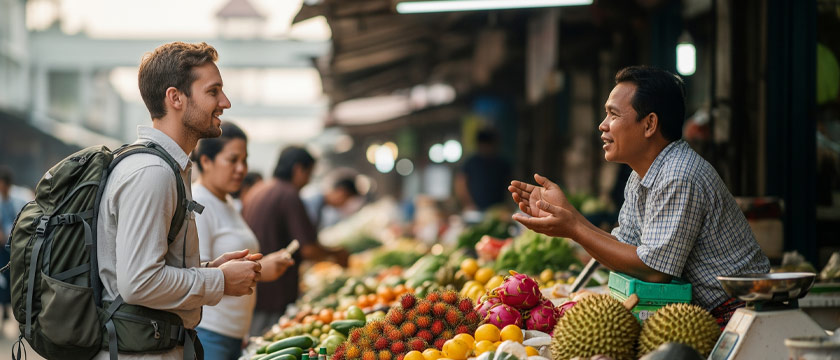
Every city worth visiting has at least one food market, and food markets are reliably one of the best places to eat in any city. Not the gourmet food halls designed for tourists (though some of these are fine), but the actual local market where vendors sell prepared food alongside the groceries. Boqueria in Barcelona is famous, and therefore worth knowing about and also worth avoiding at lunch when it’s overwhelmed. But Barcelona’s Mercat de l’Abaceria in Gracia, or any of the smaller municipal markets in the outer neighborhoods, is where people actually eat.
A market lunch or early dinner costs a fraction of a restaurant meal and often involves better ingredients prepared simply – which is usually the best food anyway.
Grocery Stores as Genuine Strategy
Not just for snacks. A well-stocked grocery store in any European city has charcuterie, cheese, fresh bread, prepared salads, olives, and often hot food prepared that day. An evening spent with a grocery store haul in your rental apartment or hotel room – wine, cheese, a baguette, some charcuterie, fruit – costs $20-$30 and is genuinely enjoyable. Not because it’s cheap. Because it’s actually good.
In Southeast Asia, convenience stores carry prepared food that’s often excellent and absurdly cheap. 7-Elevens in Thailand stock things that make no sense from an American 7-Eleven frame of reference.
Street Food: The Rules
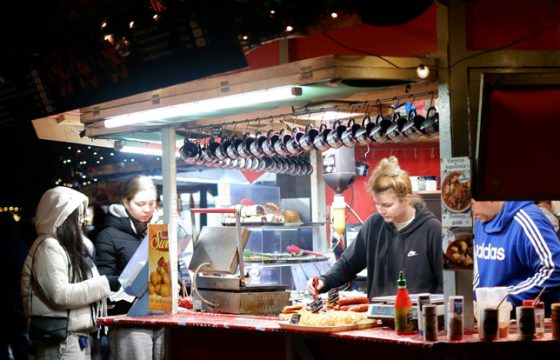
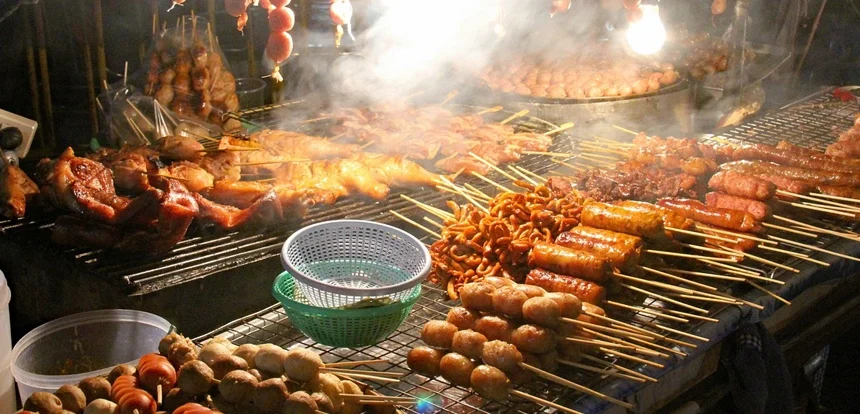
High turnover is the safety heuristic. A stall with a long local line is moving product fast, which means everything is fresh. A quiet stall with food sitting under a heat lamp is a different situation. Look for the crowds. When locals are eating it with enthusiasm, it’s usually fine. When it’s in a dedicated tourist market where every stall has an English sign and a laminated menu, the authenticity and the food quality tend to go together in the wrong direction.
The best meal I’ve had on any trip was from a woman with a cart in Chiang Mai who made one thing. I don’t remember exactly what it cost. It was something like 40 baht, which is a little over a dollar. She’d been making it the same way for years, for people who came back specifically to get it. That’s the whole point of eating like a local. You’re not just saving money. You’re eating the actual food.
For the CDC recommendations on eating safely abroad, see the CDC's food and water safety guide for travelers.