Southeast Asia has been the reference point for budget travel for a generation, and the reference has shifted. Thailand costs more than it did five years ago. Bali has a two-tier pricing system that surprises travelers who went a decade ago and expect the same numbers. But the region still offers some of the most genuine value for money of anywhere reachable by a long-haul flight, if you know specifically where to look and what to expect.
Thailand: Still Good, No Longer Cheap by Default
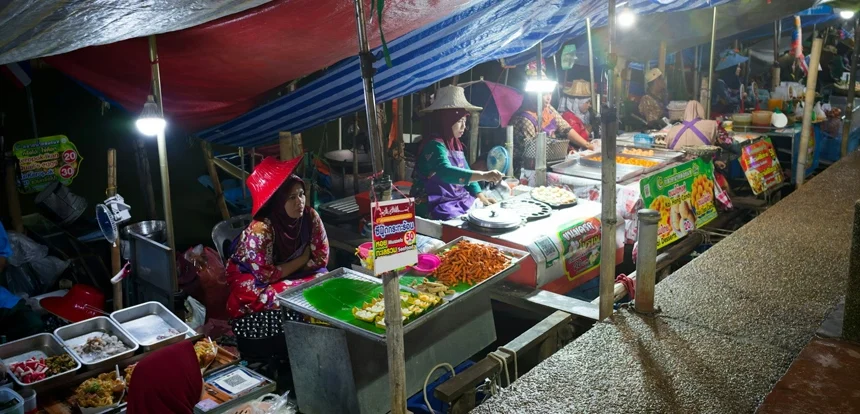
Bangkok remains one of the great street food cities in the world. A bowl of khao man gai, which is poached chicken over rice with clear broth, costs 50 to 60 baht from a street cart, roughly $1.40 to $1.70. A plate of pad see ew at a local restaurant runs 80 to 100 baht. Eating the way Thai people eat in Bangkok costs $5 to $8 a day for food.
Accommodation is where prices have climbed most noticeably. The $6 guesthouse that appears in travel blog posts from 2014 is now $18 to $25, and often worth it, since basic private rooms have improved significantly. Comfortable guesthouses in central Bangkok neighborhoods like Silom or Ari run $25 to $45. Chiang Mai, in the north, remains cheaper on every line item and offers the slower pace that stretches a budget further.
Vietnam: Currently the Best Value in the Region
Vietnam may now offer the best combination of food quality, accommodation value, and travel infrastructure in Southeast Asia. Hanoi and Ho Chi Minh City both have well-established budget traveler infrastructure: comfortable guesthouses for $15 to $25 a night, street pho for $1 to $2 a bowl, and domestic flights between major cities for $30 to $60 if booked a few weeks out.
The overnight train from Hanoi south to Da Nang, or from Da Nang to Ho Chi Minh City, saves both accommodation costs and travel time. A soft-sleeper berth runs $20 to $35 depending on the route. Hoi An, the small trading-port town between those cities, is one of the most photogenic and affordable stops in the region. Good accommodation runs $20 to $35. Local restaurants that serve the town’s famous white rose dumplings and cao lau noodles cost $3 to $5 for a full meal.
Bali: How to Do It Right
Bali has a dual pricing system, and knowing it exists saves a significant amount of money. The tourist-area restaurants in Seminyak, Kuta, and Canggu charge Western prices with Indonesian ambiance. The warungs, the family-run local eateries on the side streets of the same neighborhoods, charge a third of that. A nasi goreng (fried rice with a fried egg) at a warung costs 25,000 to 35,000 rupiah, which is $1.50 to $2.20. The same dish with better Instagram lighting at a beach club runs four to five times that.
Ubud, in the island’s interior, runs cheaper on accommodation than the beach towns and gives better access to the rice terraces, temples, and jungle landscape that is arguably Bali’s strongest argument. A private room in a guesthouse with a small pool in Ubud runs $25 to $40 a night. That same price in Seminyak gets you a room without a pool, without the scenery, and with a bill that arrives in the neighborhood of $50 once fees are added.
Cambodia: The Underrated One
Cambodia remains genuinely cheap and is frequently missing from Southeast Asia itineraries, which is to say it’s one of the better-kept secrets left in the region. Siem Reap is the base for Angkor Wat, and the three-day temple pass costs $72, which is the most expensive single attraction entry in Southeast Asia and is entirely worth it. Outside the temple complex, accommodation starts at $15, local meals run $1 to $3, and tuk-tuk transport within town costs $1 to $2. Phnom Penh is similarly priced and has a sobering but important history available in its museums.
Getting Between Countries
AirAsia, VietJet, and Lion Air cover most major routes within the region for $30 to $80 if booked a few weeks out. Overnight buses between cities in Vietnam and Thailand still run and save on accommodation. Getting there from North America or Europe involves a long flight where timing matters significantly. Our breakdown of the best time to book flights covers transpacific routes specifically. The key is that traveling during peak season (December through February, when northern Europeans and Australians are escaping winter) pushes prices up across the board. April through June and September through November run cheaper, though some areas see rain in specific months. Check the pattern for wherever you’re going.
The Rule That Changes Every Budget Calculation
The single most effective budget decision in Southeast Asia is eating where there are no English menus in the window. The moment a restaurant has translated its menu and added photographs, the price has approximately doubled for the same food. The plastic-stool street cart, the market stall, the breakfast spot with the laminated menu that doesn’t translate anything: that’s where the budget stretches furthest, and, most of the time, where the food is best.
Southeast Asia doesn’t require an elaborate strategy. It requires eating where locals eat, staying somewhere clean rather than somewhere designed for the photos, and accepting that the overnight bus to the next city is part of the experience, not a compromise.
For the latest Southeast Asia country-by-country advisories, see the State Department's travel advisories.