Everyone told me Japan would bankrupt me. The flights, sure, those are real. But the trip itself? I went in bracing for a financial beating and came home having spent less per day than I once did in Rome. The myth that Japan is hopelessly expensive survives mostly because people picture the splurge version: the omakase sushi counter, the bullet train booked at the wrong moment, the ryokan with two kaiseki meals. Those things exist. They are not the country. The country, if you let it, is one of the better-value destinations in the developed world.
Your Cheapest Meal Is in a Convenience Store, and It’s Good
I want to be clear that I am not telling you to suffer through gas-station food. The Japanese convenience store, the konbini, is a different animal. A 7-Eleven, Lawson, or FamilyMart will sell you a proper meal for a few dollars: rice balls wrapped so the seaweed stays crisp, fresh egg sandwiches that have an oddly devoted internet following, hot fried chicken, miso soup, bento boxes restocked through the day. I ate breakfast this way most mornings and never once felt cheated. A konbini meal runs roughly $3 to $6, and the quality genuinely embarrasses the equivalent back home.
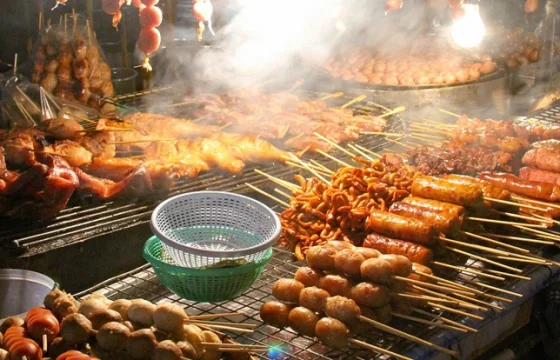
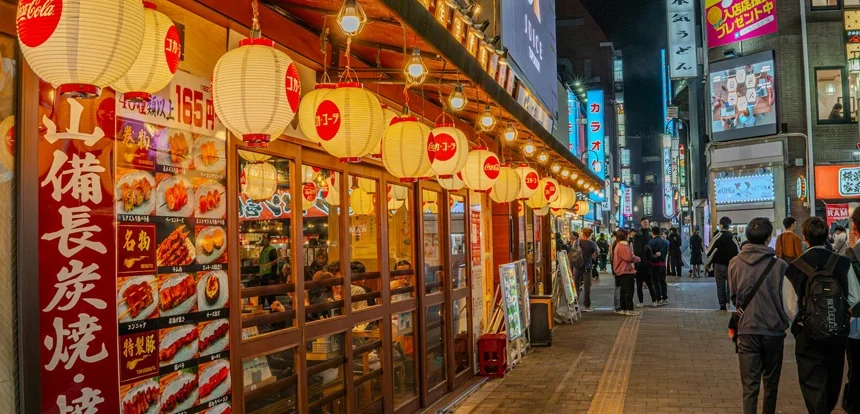
When I wanted to sit down, ramen and teishoku set meals carried me through. A bowl of ramen or a set meal with rice, a main, and pickles usually lands around $6 to $10. This is the part people miss when they decide Japan is expensive. The same logic I lean on everywhere applies double here: you save the most by learning to eat like a local instead of like a tourist. The sushi counter is the exception, not the baseline.
Sleeping Cheap Without Sleeping Badly
Capsule hotels get sold to foreigners as a quirky experience, which is true, but they are also just smart budget lodging. You get a clean pod, a locker, shared baths, and a bed that is more comfortable than the word “pod” suggests. They run roughly $25 to $45 a night in most cities. I slept fine. The trick is bringing earplugs and not being precious about it.
For a touch more privacy, business hotels are the real workhorses. These are no-frills chains built for traveling salarymen, which means small rooms, reliable wifi, a private bath, and prices around $45 to $90 a night depending on the city and season. They are not charming. They are clean, central, and exactly what you need at the end of a long walking day. I rarely paid for anything fancier and never regretted it.
The Rail Pass Math Most People Get Wrong
Here is where travelers leak money in both directions. For years the nationwide Japan Rail Pass was treated as an automatic purchase, and after a significant price increase it stopped being one. Now it only pays off if your itinerary involves several long bullet-train legs in a short window, something like Tokyo to Kyoto to Hiroshima and back. If you are mostly staying in one region, it can cost you more than buying tickets as you go.
So I started doing the boring thing: I added up my actual planned routes before buying anything. Then I looked at regional passes, which cover specific areas like the Kansai region or all of Hokkaido and often deliver better value for a focused trip. Within cities, day passes for the subway and bus erased most of my local transport costs. The lesson is simple. Match the pass to the route, not the reputation.
The Best Part of Japan Is Free
The thing that surprised me most was how much of what I loved cost nothing. Most shrines and temples are free to enter, and the famous paid ones are a few dollars. Public parks, especially in cherry blossom or autumn-leaf season, are gorgeous and open to anyone. Neighborhoods like Yanaka in Tokyo or the backstreets of Kyoto reward you for simply walking through them with no ticket required.
I spent whole afternoons drifting through markets, riverside paths, and tiny residential lanes, and those hours stick with me more than anything I paid for. If you have done Southeast Asia on a shoestring you will find Japan costs more per day, no question, but the gap is far smaller than the stereotype claims, and you get a level of polish and ease that is hard to price.
The Few Things That Genuinely Cost More
Honesty matters, so here is where Japan will actually open your wallet. Fruit is shockingly expensive; a single perfect melon can cost what a meal does, and I learned to admire those in the window rather than buy them. Taxis add up fast, so I treated them as a last resort. Long-distance bullet trains are not cheap if you skip the pass math above. And anything aimed squarely at tourists, the themed cafes and the big-name attractions, charges accordingly.
None of that breaks a budget if you see it coming. You eat from the konbini, sleep in a business hotel, walk through free neighborhoods, and spend your real money on the two or three experiences you actually crossed an ocean for.
What stayed with me, oddly, was not the savings. It was how little the cheap version felt like a compromise. The country does affordable with the same care it does everything else, and somewhere around the third egg sandwich I stopped thinking of it as budget travel at all and just thought of it as travel done right.
For trip planning resources and regional guides straight from the source, see the Japan National Tourism Organization.