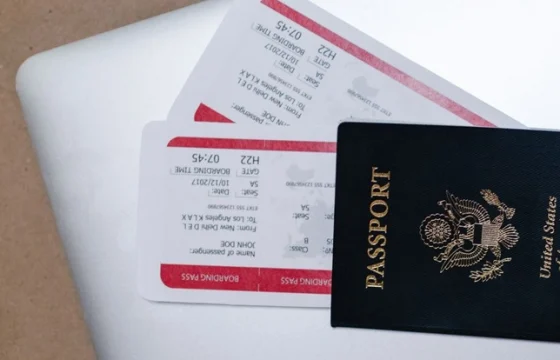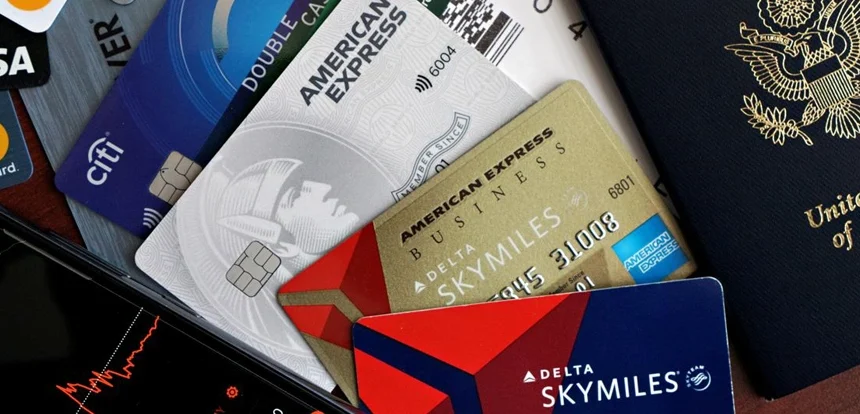
I was deeply skeptical of credit card points for a long time. The annual fees felt like a trap, the redemption options seemed deliberately confusing, and every article I read left me more uncertain than when I started. Then I redeemed 60,000 points for two round-trip flights to the Dominican Republic that would have cost $900 in cash, and my skepticism largely evaporated. The system works. You just have to approach it in the right order.
Start With One Card, Not Several
The advice to stack multiple cards and optimize every spending category is real but it’s step three, not step one. Beginning with several cards simultaneously is how people end up with points scattered across programs they don’t understand and annual fees they’ve forgotten about. Start with one card, use it for everything, and learn how that program works before adding anything else.
For most people starting out, the Chase Sapphire Preferred is the right first travel card. We’ve compared it alongside six other options in our travel credit card guide, which covers everything from no-annual-fee options to premium cards. The annual fee is $95. Points transfer to a broad list of airline and hotel partners including United, Southwest, Hyatt, and British Airways, which is where most of the real value comes from. Earning rates are 3x on dining and 2x on travel, 1x on everything else. The sign-up bonus, when it appears, is typically worth $500 to $750 in travel. Nothing about this card requires expertise to use, and it opens the door to a points program that rewards learning over time.
If $95 feels like the wrong place to start, the Capital One Venture Rewards card at the same fee is simpler: 2x miles on everything with no category tracking required. Less ceiling, less complexity. A reasonable alternative for anyone who wants one card that rewards every purchase equally without thinking about categories.
The Sign-Up Bonus Is Most of the Value
This is worth saying clearly: the sign-up bonus is the primary financial argument for getting a new travel card. A bonus of 60,000 to 100,000 points, earned by spending a certain amount in the first few months, is often worth $600 to $1,500 in travel depending on how you redeem. That bonus doesn’t repeat. You earn it once when you open the card.
Hit the minimum spend requirement using purchases you were already going to make: groceries, gas, utilities, subscriptions. Do not spend money you otherwise wouldn’t in order to reach the threshold. The math only works if the spending is money that was coming out of your account regardless.
How Points Actually Become Flights
There are two main ways to use points for travel, and they return very different value.
The first is redeeming directly through the card’s travel portal, which works like a regular booking site except points pay for it. Chase’s portal values points at 1.25 to 1.5 cents each depending on the card. This is simple and flexible but not where the best value comes from.
The second is transferring points to an airline or hotel loyalty program and booking an award there. This is where the math gets genuinely interesting. Transferring 60,000 Chase points to United and booking a business class flight to Europe that retails for $3,000 returns a value of 5 cents per point rather than 1.25. The process requires more research, but the difference in value is significant enough to be worth understanding.
For beginners, the simplest high-value redemption is transferring Chase or Capital One points to Hyatt for hotel nights. Hyatt has one of the more favorable award charts in the hotel space, and a points transfer can book properties that cost $300 to $500 a night in cash for 12,000 to 20,000 points per night. This is the redemption I recommend to anyone starting out because it’s predictable and consistently delivers strong value.
Annual Fees Are Not the Enemy
A $95 annual fee on a card that waives two checked bag fees per round trip for two people ($140 in savings) is a net positive of $45 before any other benefit is counted. A $550 annual fee on a card that includes $300 in automatic travel credits and Priority Pass lounge access is effectively a $250 fee for those who use both. Annual fees are worth evaluating against the benefits actually used, not against a principle of not paying them.
The Three Mistakes Worth Avoiding
Carrying a balance. Points cards charge high interest rates. Any month where you don’t pay in full, the interest cost erases the value of everything you earned. The system only works if the card is paid off completely every month, every time.
Hoarding points indefinitely. Points don’t appreciate and programs do change their redemption rates over time, usually for the worse. Accumulate with a purpose and redeem within a reasonable window of achieving the goal.
Opening too many cards too fast. Multiple hard credit inquiries in a short period affect your credit score. Spacing new card applications at least six months apart, and never opening more than you can track and pay off, keeps the credit profile healthy and the strategy sustainable.
The points system rewards consistency more than complexity. Use one good card for everything, earn the sign-up bonus, learn the transfer partners, and book one trip with the result. Everything that comes after that is an expansion of something you already understand.
For the federal consumer rules governing credit card reward programs, see the CFPB's credit card program guides.